 Ms. Jillian Alfred (M.S. '13)
Chief Engineer, Air Dominance and Strike
Anduril
Jillian Alfred is currently a Chief Engineer in the Air Dominance and Strike division at Anduril. In her role, she oversees the technical direction and execution of a fast paced advanced effects program. She interfaces with all engineering disciplines, test and evaluation, program management, and business development to build the optimal product on the aggressive timeline that underscores the creed of Anduril.
Prior, Jillian Alfred was the Head of Flight Controls, Actuation, and Utility Systems department at Supernal, an affiliate of Hyundai Motor Group working to develop a new urban air mobility electric vertical take-off and lift (VTOL) vehicle. In this role, she oversaw over 40 people executing the technical design, supplier management, and aircraft build of the fly-by-wire aircraft.
She began her career at Bell, Textron Inc. starting as a member of the 525 Relentless aircraft (first commercial fly-by-wire helicopter) Control Law team and later holding positions as the Control Law Supervisor and Flight Controls Manager for the 525 team. In her capacity there, Jillian designed many aspects of the control laws and flight controls monitoring structure, which she has 12 patents granted including one patent as sole author. Jillian participated in all aspects of the program life from design, lab test and verification, flight test, and certification.
Jillian received her B.S. in Aerospace and Mechanical Engineering from Princeton University with a certificate in Robotics and Intelligent Systems. She received her M.S. in Aerospace Engineering from University of Maryland with a concentration in rotorcraft and guidance systems. While at UMD she was a research assistant for Dr. Roberto Celi and worked with Dr. Gordon Leishman. Her thesis concentration was an optimization of a flight path into a brownout cloud using a high fidelity model.
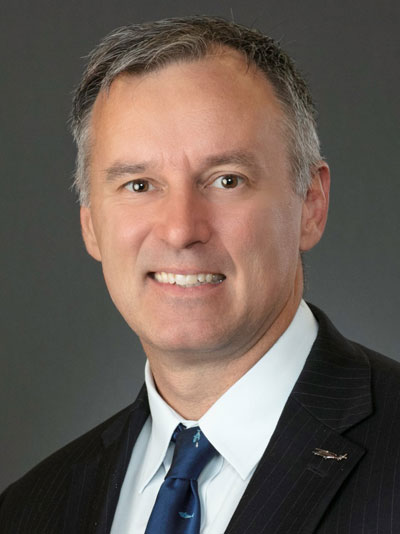 Dr. Andreas (Andy) Bernhard (M.S. ’95, Ph.D. ’00)
Director, Technical Road Maps,
Advanced Development Programs, Aeronautics
Sikorsky Aircraft, a Lockheed Martin Corporation Company
Dr. Andreas (Andy) Bernhard is the Director of Tech Road Maps in Advanced Development Programs, aka Skunkworks. He is responsible for leading innovation in domains spanning revolutionary air vehicles, mission systems with(incl AI and autonomy) and signature management. The NASA X-59 Quiet Supersonic Transport falls under the purvey of Tech Road Maps for example. Prior to that Andy was the Director of Aircraft Design at Sikorsky Aircraft, responsible for all technical aspects related to the design of air vehicles and dynamic components across all development, in-production and out-of-production platforms.
Before that Andy was a Chief Engineer for over 10 years, first as CE of the Sikorsky aftermarket, then CE of S-97 RAIDER (taking that aircraft to first flight) and finally as CE CH-53K KING STALLION (leading that from before first flight to deep into envelope expansion). Major accomplishments included the public & international debut at the Berlin Airshow in Apr 2018 and envelope expansion to include max gross weight of 88,000 lb; and speeds in excess of 170 knots.
Dr. Bernhard graduated from the University of the Witwatersrand (in Johannesburg South Africa) with A B.Sc. (Aeronautical Engineering) in 1992 and from the University of Maryland with a Ph.D. in Aerospace Engineering in 2000. His research was on smart rotor technology including hover testing of blades with active tips, active twist and trailing edge flaps. He holds 5 patents, has authored 12 peer reviewed Journal Articles and over 20 Conference papers. He has also won numerous awards including most recently being elected as Associate Fellow of AIAA, and prior to that Technical Fellow of the Vertical Flight Society Technical Fellow and the Lockheed Martin Nova Award.
Outside of work, Andy is an avid private pilot (and has flown with his now 7 year old son to Oshkosh and raced the EAA Venture Cup 3 times, and routinely watches Cape Canaveral rocket launches several thousand feet above Titusville) is a now recreational (and former competitive) cyclist; and has restarted playing competitive water polo in (having previously played at the University of Maryland). He also coaches boys (incl., Andy 4) U8 soccer and U8 baseball.
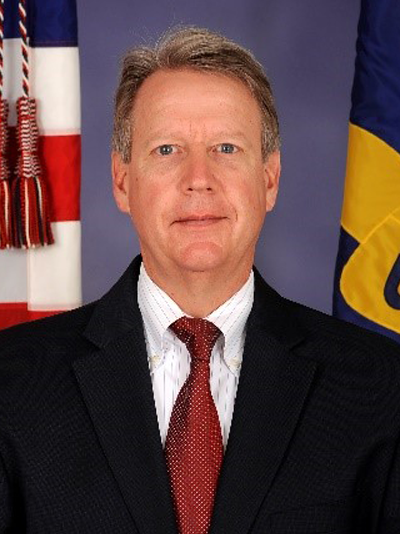 Mr. Steven Donaldson ('87)
Board of Visitors Vice Chair
Naval Air Warfare Center Aircraft Division
Director, Air Vehicle Engineering Department
Senior Scientific Technical Manager (SSTM)
Mr. Donaldson (B.S. '87) currently serves as the Director of the Air Vehicle Engineering Department within the Air System Group at the Naval Air Warfare Center, Aircraft Division (NAWCAD). This department is comprised of over 450 personnel responsible for delivering air vehicle engineering products and services for acquisition and sustainment engineering activities for Naval Aviation. He is responsible for the planning, direction, and execution of the Research, and Engineering efforts related to the development and sustainment of Naval Aviation assets across the technical disciplines within the department including Aeromechanics, Structures, Materials, and Aircraft Subsystems engineering.
Mr. Donaldson currently serves on the Board of Directors for the Department of Defense (DoD) High Performance Computing Modernization Program Computer Research and Engineering Acquisition Tools and Environments (CREATE) Air Vehicles Project whose charter is to develop and deploy computational engineering tools that address the needs of the air vehicle acquisition programs across the DoD.
Mr. Donaldson serves on the Project Lead the Way Program Advisory Council for the Calvert County Maryland Public Schools advising and assisting with educational curriculum, advising students, faculty, county and state-level administrators, and providing educational opportunities to program participants. With a similar function, Mr. Donaldson serves on the University of Maryland Aerospace Engineering Department’s Board of Visitors.
From August 2007- March 2020, Mr. Donaldson served as the Head of the Aeromechanics Engineering Division within the Aircraft and Unmanned Aerial Vehicle Department at the Naval Air Systems Command. This national engineering division is comprised of approximately 160 personnel responsible for delivering aeromechanical engineering products and services for acquisition and sustainment engineering activities for Naval Aviation. He served as the principal NAVAIR spokesman and authority for air vehicle aeromechanics engineering matters and technology. His responsibilities included the planning, direction, and execution of the Research, and Engineering efforts related to the development and sustainment of Naval Aviation assets across the technical disciplines within the division including Applied Aerodynamics, Stability & Control, Aircraft Performance, Flight Controls, Store Separation, and Flight Vehicle Modeling and Simulation.
Mr. Donaldson holds a Bachelor of Science degree in Aerospace Engineering from the University MD and has over 35 years of service with the Department of the Navy including serving as an aerospace engineer within the Product Integrity and the Aeromechanics Engineering Divisions within the Naval Air Systems Command.
 Mr. Marcio Duffles ('83)
Board of Visitors Chair
Vice President, Business Development
MDS Coating Technologies Corporation
Mr. Duffles received his undergraduate degree in Aerospace Engineering at the University of Maryland in 1983. He worked for the Naval Air Systems Command Propulsion Division from 1983 -1997 as an engine performance analyst and manager of technology demonstrator engines. Mr. Duffles has worked for MDS Coating Technologies (MCT) since 1997 providing engineering and management support for developing, testing and implementing erosion / corrosion protective coatings for various military and commercial aviation and industrial gas turbine engines.
He was appointed Vice President, Business Development in 2007 and has continued to transition the protective coating technology to various platforms - saving over $1B in maintenance costs for military aircraft and millions of dollars in fuel savings for commercial aircraft. The coating technology has been recognized by the Vertical Flight Society Jensen Award (2007), Department of Energy R&D Innovation Award (2013) and the Federal Aviation Administration’s Continuous Low Energy Emissions and Noise
 Mr. Chris Gettinger
Director, Advanced Propulsion and Systems
Northrop Grumman Defense Systems,
Weapon Systems Division
Mr. Gettinger is a seasoned professional with over 25 years of experience in program management, engineering, strategy & marketing, engine testing and flight testing. He currently serves as Director of the Advanced Propulsion & Systems (AP&S) Operating Unit, managing Northrop Grumman’s portfolio of airbreathing and boosted hypersonic propulsion programs, including missile and platform propulsion and hypersonic test products and services.
Prior to becoming Operating Unit director, Mr. Gettinger was an engineering director, with overall responsibility for technical execution on the development of multiple propulsion systems. He also served as a site lead, capture/strategy lead for multiple pursuits and held various management positions in the engineering organization.
Mr. Gettinger began his career at Boeing/McDonnell Douglas working system integration and performance for hypersonic airbreathing and boost-glide vehicles, wind tunnel test support for the Joint Direct Attack Munition (JDAM) program, flight test support for the F/A-18E/F Super Hornet and fleet support for the T-45 trainer.
Prior to joining Northrop Grumman, Mr. Gettinger gained additional experience in engine development at Pratt & Whitney, working performance modeling, engine design and propulsion integration.
Mr. Gettinger holds a bachelor’s and master’s degree in aerospace engineering, graduating magna cum laude. He has authored numerous technical papers on hypersonic airbreathing propulsion and holds patents on propulsion systems and components.
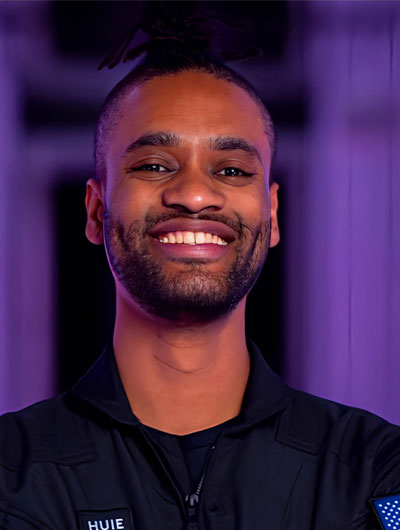 Mr. Christopher Huie ('11)
Crew Mission Manager
Vast
Christopher Huie, known as “Chuie,” is an astronaut and aerospace engineer currently serving as Crew Mission Manager at Vast. In this role, he helps pioneer the next frontier of commercial human spaceflight, building the foundation for more people to live and work in space. His work integrates engineering, operations, and mission management to ensure astronaut readiness and mission success as Vast develops Haven, the world’s first commercial space station.
Previously, Christopher spent nearly a decade at Virgin Galactic, where he helped pioneer the world’s first spaceline and advance suborbital spaceflight toward commercial operations. His contributions included six years of leadership in the Flight Sciences External Loads Engineering discipline, supporting the design and operation of the air-launched Spaceflight System, and later as Senior Manager of Delta Program Support, overseeing systems integration, process development, and program execution. As a Mission Specialist on Unity 25, Christopher played a key role in Virgin Galactic’s final test flight, paving the way for the company’s first commercial mission, Galactic 01. He is among the first 650 humans to venture into space and only the 19th Black astronaut in history.
Before joining Virgin Galactic, Christopher spent over five years at Bell Flight, contributing to various rotorcraft programs as both an External Loads and a Simulation Engineer. He holds a B.S. in Aerospace Engineering from the University of Maryland, College Park (UMD), where he was a scholar in the QUEST Honors Program and the Igor Sikorsky Scholarship Program. In 2022, he was inducted into the inaugural class of UMD’s Clark School of Engineering’s Early Career Distinguished Alumni Society, which recognizes alumni under 40 years old for their leadership, innovation, service, and entrepreneurship.
Christopher's dedication to mentoring and inspiring students in Science, Engineering, and Aerospace is evident through his involvement in Virgin Galactic's outreach initiative, Galactic Unite, and his Co-Founder role in the Black Leaders in Aerospace Scholarship & Training (BLAST) Program. A Virgin Unite 2021 “Together We Can: Change” winner, he is actively involved in outreach efforts to improve preparedness and increase opportunities for underrepresented groups in aerospace. In his free time, he enjoys being a dad, learning, plant-based cooking, and pursuing interests in music, rock climbing, Seinfeld, Star Trek, and innovative space business ideas.
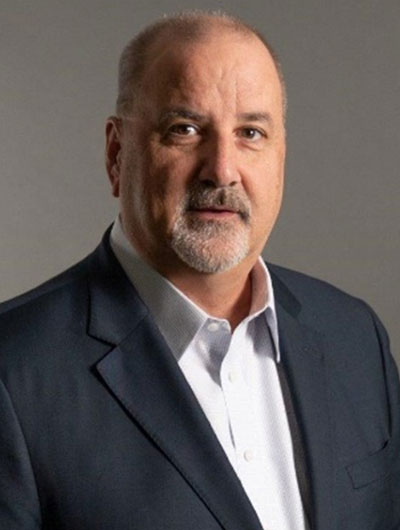 Mr. Phil Joyce ('85)
Senior Vice President, New Shepard Business Unit
Blue Origin
Phil Joyce serves as Senior Vice President of the New Shepard Business Unit at Blue Origin, a private space company founded with a vision of millions of people living and working in space for the benefit of Earth. Phil directs all aspects of New Shepard operations and business unit management, with a focus on radically reducing space launch costs while increasing flight opportunities for thousands of future astronauts. During his time with New Shepard, he has led the team that conducted the first commercial suborbital human spaceflight to space, and in just 15 months safely launched 5% of the Earth’s population of astronauts above the Karman line.
Phil leverages a 40-year background in Aerospace and Defense with extensive experience in the development and management of large and complex programs. He has extensive experience with human spaceflight, launch vehicle development, expendable and reusable space launch systems, missile defense, and hypersonic flight research. Prior to joining Blue Origin in 2020, Phil had a 28-year career with Orbital Sciences Corporation, Orbital ATK, and ultimately Northrop Grumman. At Northrop, he held a variety of leadership positions in the Launch Vehicles Division, where he was most recently Vice President, Small Space Launch Programs. Prior to that, he served as Vice President for the Ground-Based Midcourse Defense (GMD), Ground-Based Interceptor (GBI) Booster Program for the Missile Defense Agency and was a Program Manager for other strategic missile and hypersonic initiatives. His work on the Hyper-X, X-43A program still holds the record for the fastest air-breathing hypersonic aircraft at Mach 9.8. He began his career working on Strategic Missile Defense space initiatives at the Pentagon and later at the Johns Hopkins University/Applied Physics Laboratory.
Phil holds a B.S. in Aerospace Engineering from the University of Maryland and performed graduate study in Applied Physics at The Johns Hopkins University and the Wharton School of Business. He is a native of Washington, D.C. and currently resides in Seattle with his wife June.
 Mr. Vivek Kuppusamy ('09)
Services Director for the CFM56 engine platform
GE Aerospace
Vivek Kuppusamy is the Services Director for the CFM56 engine platform at GE Aerospace, based in Cincinnati, Ohio. In this role, Mr. Kuppusamy leads a global team responsible for all GE maintenance agreements for the CFM56 engine, powering the 737 and A320 families of commercial aircraft with an installed base of 23,000+ engines across 600+ customers around the world.
Mr. Kuppusamy joined GE Aerospace in 2009 on the Edison Engineering Development Program (EEDP) – a 3-year rotational program designed to give recent graduates a breadth of technical experience across various engineering departments within the jet-engine manufacturer. He completed assignments with increasing responsibility in (1) Combustion design supporting NASA supersonic programs, (2) Acoustics design on the Open Rotor demonstrator, and (3) Aircraft Performance in development of the GE9X engine powering Boeing’s 777X airframe. During this time, he also graduated from GE’s Advanced Course in Engineering (ACE) – a rigorous 3-year curriculum on jet engine design facilitated by functional and industry experts.
In 2015, Mr. Kuppusamy was invited to join GE Aerospace’s Experienced Commercial Leadership Program (ECLP) and Accelerated Leadership Program (XLP) to build commercial depth within GE’s Commercial Engines and Services division. Over the next several years, he executed responsibilities as the head marketing and strategy leader for the HF120 engine (joint venture with Honda to power the new HondaJet aircraft), Sales Support Director for contracts with airlines and lessors in the Americas, APAC/China Business Operations leader for the CF34 program, and Sales Operations leader, where he led a global team in charge of deal restructures and the company’s CRM platform.
Mr. Kuppusamy has a bachelor’s degree in Aerospace Engineering from the University of Maryland (2009) and a master’s degree in Aeronautical Engineering from The Ohio State University (2012). He is a proud of member of Omicron Delta Kappa (Sigma Circle, 2008), Sigma Gamma Tau (2007), and Tau Beta Pi, where he served as President of UMD’s chapter from 2008-2009.
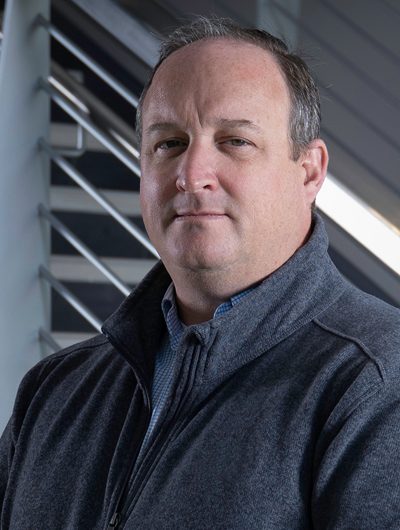 Scott Newbern
Vice President and Chief Technologist, Office of Chief Technology Officer
AeroVironment
Scott Newbern has served as the Vice President and Chief Technologist within the Office of Chief Technology Officer of AeroVironment since May of 2025. Scott was the Vice President and Chief Technology Officer from 2018 to 2025. This includes the leadership of our Pathfinder Program, a technical leadership program which comprises our technical fellows and select exceptional engineering talent. Scott led the overall physical and industrial security activities between 2022 and 2025. Scott previously founded the MacCready Works Laboratory – a focal point for AeroVironment’s continuous innovation, focusing on relentless problem solving and doing what has never been done before. Scott served as the Vice President of Small Unmanned Aircraft Systems beginning in 2012. He guided the strategic and tactical activities for the SUAS business area. Scott has served in various UAS leadership positions at AeroVironment since joining the company in 1997. Scott led advanced UAS development activities including establishing high volume SUAS manufacturing capability and high rate of growth at AeroVironment.
Scott is a member of the board of directors for the Association for Uncrewed Vehicle Systems International (AUVSI), a member of Business Executives for National Security (BENS,) a member of the advisory board for the Aviation Unmanned Vehicle Museum (AUVM) a member of the Engineering Leadership Technology Council for Aerospace Industries Association(AIA,) and a member of board of advisors for Embry Riddle University.
Scott earned his undergraduate degree for Aerospace Engineering in 1994 from NC State University followed by a Master of Science degree in 1997 for Aerospace Engineering with minor in Mathematics. His specialty area of focus included aerodynamic modeling and control system design. Scott also completed Stanford Executive Institute program for high technology executives and completed Executive Mastery with Gap International.
 Mr. Daniel (Dan) Newman (M.S. ‘92)
Chief Engineer Maneuver Dominance, Anduril Industries
Dan Newman is the Chief Engineer on the Maneuver Dominance Team at Anduril, a Defense Products Company. He previously served as the Chief Technology Officer for Honeywell Aerospace’s Advanced Air Mobility Division, and as Boeing’s Chief Engineer for Advanced Vertical Lift while a Senior Technical Fellow in Aircraft Configuration Development, and served as a program manager at the U.S. Department of Defense at the Defense Advanced Research Projects Agency (DARPA).
Dan is a Fellow of the American Institute of Aeronautics and Astronautics (AIAA), a Technical Fellow, and an Honorary Fellow of the Vertical Flight Society (VFS), for which he served as the Society’s Technical Director and Vertical Flight Foundation Scholarship Committee Chair. Dan has also chaired the NATO Industry Advisory Group (NIAG) Study Groups SG-219 Next Generation Rotorcraft Capabilities, SG-239 on Integrated Sustainability for the Next Generation Rotorcraft, and SG-266 on Joint-Domain NATO Rotorcraft Interoperability and Survivability in a Peer Nation Threat Environment.
Dan received his Bachelor of Science in Mechanical Engineering from the Sibley School at Cornell University and his Masters in Aerospace Engineering from the Alfred Gessow Rotorcraft Center at the University of Maryland, where he was named a Distinguished Aerospace Engineering Alumnus.
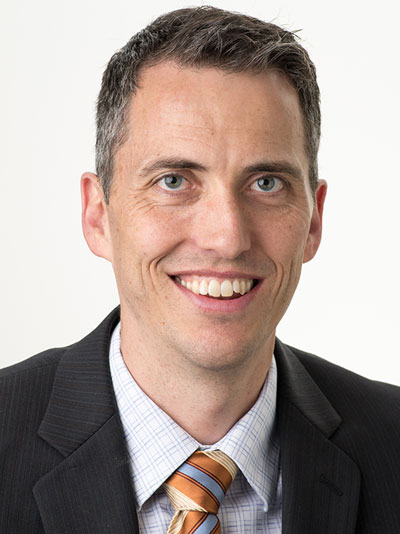 Mr. Benjamin (Ben) Parrington
Director, Product Engineering
ST Engineering – MRAS
As Director, Product Engineering at ST Engineering – MRAS, Ben Parrington is responsible for the Engineering activities associated with the product development and sustainment of engine nacelles and aerostructure products produced by the team in Baltimore, MD.
From 2006 to 2019, Ben has held various roles within GE Aerospace in the Nacelles Engineering team. Focused primarily new programs, Ben has headed Integrated Product Teams developing nacelle structures for Boeing 747-8, Airbus A320neo and COMAC C919 programs. In 2017, he took his current role leading the Engineering team.
Ben started his career as an engineer for Boeing Australia in 2000 and completed assignments with Commercial Airplane Services in Seattle, WA and supporting the F-111C airframe at Amberley Air Force Base, located near Brisbane, Australia. Relocating to Los Angeles, CA with GKN Aerospace in 2003, Ben joined the team developing the center fuselage for the F-35 Lightning II program.
He attended the Royal Melbourne Institute of Technology (RMIT) in Melbourne, Australia and graduated with degrees in Aerospace Engineering and Business Administration in 1999.
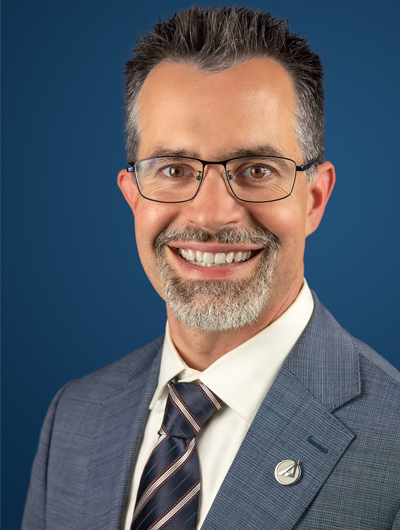 David Pinson (M.S. '07)
General Manager, Electronic Programs Division (EPD)
The Aerospace Corporation.
In his role as GM, Electronic Programs Division (EPD), David Pinson is responsible for leading the corporation’s support to the Signals Intelligence Systems Acquisition Directorate within the National Reconnaissance Office (NRO), facilitating his team’s efforts to align with the rapidly diversifying portfolio of the government customer and respond to new acquisition approaches and risk tolerance challenges while meeting mission requirements. Under his leadership, Pinson’s team provides spacecraft design and mission assurance support, anomaly resolution for integration and test, new space constellation architecting, architecture performance modeling, and systems engineering in support of a multibillion-dollar space portfolio—activities that are helping the customer build a new constellation of highly integrated systems to meet the needs of the analyst and the warfighter for decades to come.
Previously, Pinson served as the principal director of Ground Engineering in the Ground and Comm Division at Aerospace, where he oversaw development and sustainment of ground systems for the NRO’s overhead assets. Key contributions included building a sustained modeling and simulation capability for ground architecting and custody modeling; providing surrogate data for risk reduction of new ground systems; and pivoting Aerospace’s ground focus toward emerging proliferated space systems. Prior to that, Pinson was the principal director in Directorate V in the EPD, where he led a team charged with the rapid acquisition of operational capabilities, technology advancement, and architecture development.
Pinson joined Aerospace in 2014 as a senior project engineer in the Vehicle Concepts Department where he performed space vehicle concept studies for customers including NASA, the Department of Defense, and the NRO. In recognition of his achievements, Pinson was steadily promoted to positions of increasing responsibility and authority, including systems director for Directorate L in the EPD. During his time there, Pinson supported mission performance assessments, systems engineering, concept and technology development, and architecture analysis. Throughout his EPD tenure, he pioneered early efforts to integrate resiliency technologies into existing systems, as well as include smaller, less reliable satellites to augment established constellations as a means of advancing mission capabilities on a rapid timeline.
Before joining Aerospace, Pinson was a technical intelligence officer for the CIA where he supported numerous payload development activities for space, airborne, and NRO programs. He also supported frequency management activities and worked as a legislative liaison for the NRO, collaborating with congressional staffers to resolve budget challenges.
Education: Pinson earned a bachelor’s degree in aeronautics and astronautics from the Massachusetts Institute of Technology and a master’s degree in aerospace engineering from the University of Maryland.
Awards and Honors: Pinson was awarded Aerospace’s highest honor, the Trustees’ Distinguished Achievement Award; he received the Meritorious Unit Citation for Service in the CIA Advanced Airborne Group; he was named NRO Signal Intelligence Employee of the Year and NRO BPO Employee of the Year; he received the NRO Gold Medal for Distinguished Service; he also earned Project Management Level 3 and COTR Level 3 certifications.
 Ms. Lisa Policastri (’00)
Chief Operating Officer and Co-Founder
Space Exploration Engineering, LLC (SEE)
Lisa Policastri is the Chief Operating Officer and Co-Founder of Space Exploration Engineering, LLC (SEE), a Maryland small business. She is an expert in space mission operations, specializing in applying feasible orbit determination and operational strategies to navigate spacecraft with complex trajectories. Lisa specializes in flying lunar and cislunar satellite missions. She was the Orbit Determination Lead for the NASA Lunar Atmosphere and Dust Environment Explorer (LADEE) and NASA’s Interstellar Boundary Explorer (IBEX) and has worked on many other successful space missions and mission concepts. In addition to her role as SEE’s COO, Lisa currently provides expertise to NASA’s HelioSwarm program, planning for launch in 2029. Lisa and her team bring their experience to the commercial sector by routinely training and advising space mission teams across the United States and globally to spread their knowledge and create new experts in this industry.
Lisa is a native Marylander from Baltimore City, and her grandmother was a “Rosie” who riveted sea planes at the Glenn L. Martin Company in Middle River, Maryland during WWII - this makes Lisa a “Rosebud”, and she is a member of the American Rosie the Riveter Association. Lisa stays active in her local community with the General Federation of Women’s Clubs (GFWC), Woman’s Club of Laurel, previously serving as Corresponding Secretary and Newsletter Editor. Lisa is currently serving a second term on the American Astronautical Society Space Flight Mechanics Committee, after serving an initial term earlier in her career when she served as the Committee Historian.
Lisa holds a Bachelor of Science in Aerospace Engineering, Astronautics Track, from the University of Maryland A. James Clark School of Engineering, and a Master of Science in Management from the University of Maryland University College. She is also an alumna from the Baltimore Polytechnic Institute.
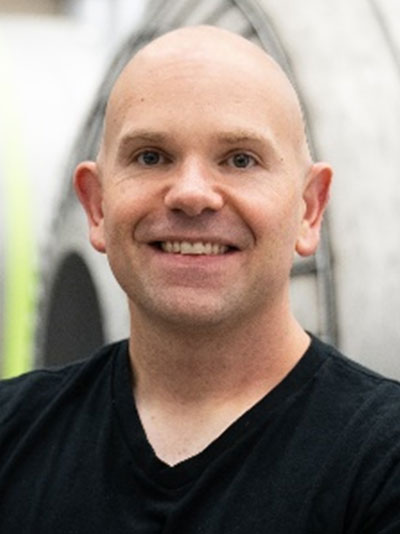 Dr. Justin Richeson (’03, M.S. '05, Ph.D. '08)
Sr. Principal Integration Performance Engineer
Relativity Space
Dr. Richeson is the Sr. Principal Integrated Performance Engineer at Relativity Space where he works across all aspects of vehicle analysis – leveraging his breadth of expertise in Flight Sciences, GNC, and software development. He currently works on the design of the medium-lift Terran R and supported the inaugural launch of the first 3D printed rocket Terran 1 in March 2023.
Prior to Relativity Space, Justin joined SpaceX in early 2008 when the company was less than 500 employees. Over a span of 14 years, he worked in five departments as both a manager and individual contributor. Some highlights include being the responsible engineer of the first Falcon 9’s Hardware In and Out Of The Loop (HITL/HOOTL) development and F9-1 day-of-launch operations. He led interdepartmental teams for the Falcon 9 v1.1 booster entry and landing redesign, and Cargo Dragon C1 and C2+ mission analyses. Justin was instrumental in early Crew Dragon development, including setting several Super Draco requirements and working on all aspects of the outer mold line. As SpaceX began flying frequently, Jusin pivoted to software automation and eventually led the Launch Software team, which employed machine learning and model-based simulation for rapid pad, vehicle, and day-of-launch automated checks.
Dr. Richeson is a Maryland native, and his degrees are from the Aerospace Engineering department at the University of Maryland (UMD). His doctoral research on gravitational gradients for navigation earned him a 2008 AIAA Orville and Wilbur Wright Graduate Award, an Institute of Navigation (ION) student sponsorship, and ION best paper for his session.
Outside of work, Justin and his wife Lauren are active in volunteering and philanthropy. They endowed a UMD Aerospace Engineering Scholarship in Justin's father's namesake; contribute to a variety of nonprofit organizations; and volunteer their time at the Merritt Island Wildlife Refuge (Lauren) and Take Stock in Children mentorship program (Justin). While living in Kona, HI, Justin mentored the West Hawaii Exploration Academy's (WHEA) First Robotics Competition (FRC) team, helping lead them to captain their division at the 2018 International Championship in Houston, TX.
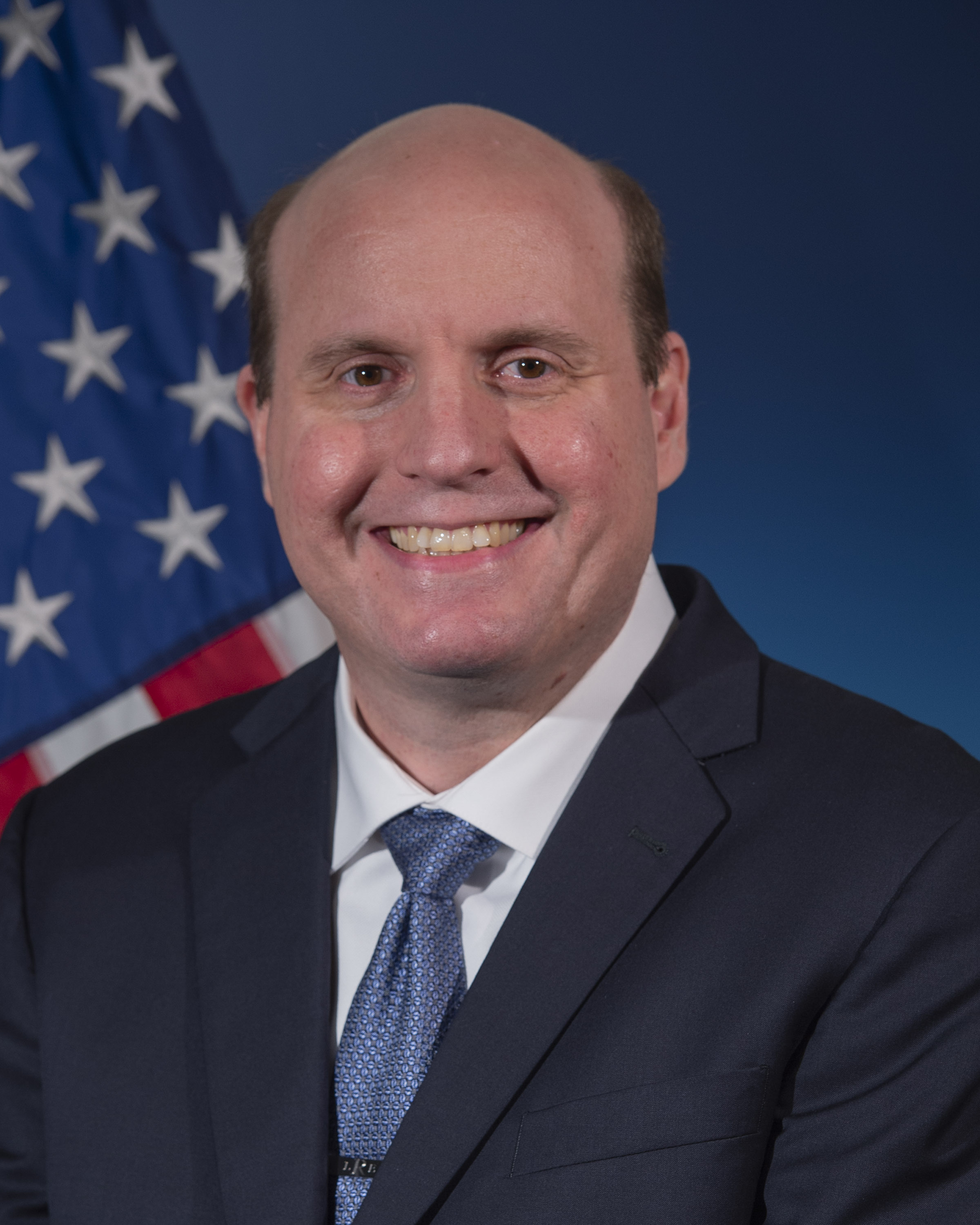 Dr. Lael Rudd
Program Manager, Tactical Technology Office
DARPA
Dr. Lael Rudd is currently a Program Manager at the Defense Advanced Research Projects Agency (DARPA) developing autonomy and artificial intelligence programs in the Tactical Technology Office and Defense Sciences Office supporting air, space, and soldier systems.
Prior to joining DARPA, he was chief scientist for BAE Systems’ FAST Labs, where he was responsible for programs relating to Manned-Unmanned Teaming (MUM-T) including a national effort. Rudd also developed model-based systems engineering (MBSE) processes for the organization and co-authored the Electronic Systems Sector Autonomy Technical Strategy.
He previously worked at the Charles Stark Draper Laboratory as a Distinguished Member of the Technical Staff. While there he was the Technical Director for the Conventional Prompt Strike hypersonic program, bringing model-based engineering into the program as well as other advanced technologies. He also advanced the lab’s autonomy technical strategy and worked alternative positioning, navigation, and timing (PNT) efforts.
Before Draper, Dr. Rudd worked at Lockheed Martin Advanced Technology Laboratories as a Research Area Lead for autonomy and human-machine interactions. His efforts included both aircraft and undersea autonomous platforms.
Dr. Rudd spent the majority of his career at Northrop Grumman Aerospace Systems with a multitude of assignments. These included managing the Autonomy, Flight Controls, and VMS Technology Development Area and being the Sector’s Technical Area Lead for Autonomy. He held key positions for national programs relating to aircraft (crewed and unmanned) and space programs.
Rudd began his post-graduate career as a Member of the Technical Staff at the Aerospace Corporation where he performed guidance analysis and V&V of flight software for Delta and Atlas launch vehicles.
His contributions have extended beyond his career positions. Dr. Rudd has taught undergraduate and graduate courses in the Mechanical and Aerospace Department at the University of California, Los Angeles, and the Electrical Engineering Department at the University of Southern California. He was a member of the National Academies Committee that developed the U.S. National Agenda for Autonomy Research related to Civil Aviation. He has served on the AIAA Technical Committees for Human-Machine Teaming, Intelligent Systems, and Guidance Navigation and Control. He has also served on multiple panels for AIAA and NASA.
Rudd received B.S., M.S., and Ph.D. degrees in Aerospace Engineering from the University of Maryland, College Park. In addition, he received an M.S degree in Biomedical Engineering from the University of Southern California and is currently finishing his M.S. in Computer Science from the Georgia Institute of Technology. He is an AIAA Associate Fellow and an IEEE senior member. He has three patents and eight trade secrets. He has received multiple awards for program performance and innovation. Rudd is also certified as a Project Management Professional. Dr. Rudd’s name is engraved on the National Air and Space Museum's Wall of Honor at the Steven F. Udvar-Hazy Center.
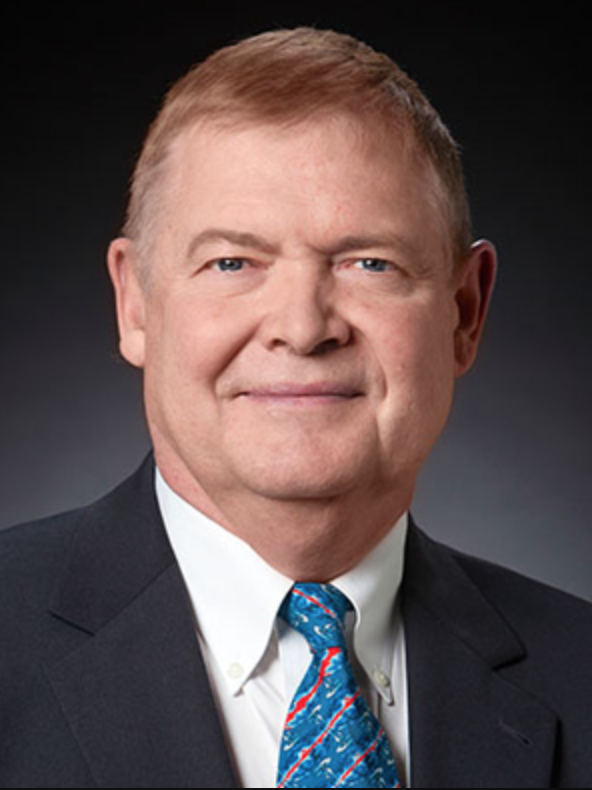
Dr. Michael Ryschkewitsch (Ph.D. '78) Emeritus
Michael G. Ryschkewitsch retired in 2022 as Sector Head for the Space Exploration Sector of the Johns Hopkins University Applied Physics Laboratory. In that role he was responsible for APL’s portfolio of space programs for both NASA and national security sponsors spanning many aspects of solar system research, from space physics to space situational awareness and planetary probes.
He led an experienced science, engineering and program management cadre to pursue groundbreaking space opportunities, enhance innovation and affordability, and meet high standards in product quality and timeliness. He continues to serve as a member of the technical staff in support of projects and also currently chairs the Engineering and Science Interface Panel of the National Academies Decadal Survey on Biological and Physical Sciences Research in Space 2023-2032: Engineering and Science Interface Panel.
As the nation’s largest University Affiliated Research Center, APL performs research and development on behalf of the Department of Defense, the intelligence community, the National Aeronautics and Space Administration, and other federal agencies.
Before joining the Laboratory, Dr. Ryschkewitsch served for over thirty years at NASA with the last seven years as the NASA Chief Engineer. Dr. Ryschkewitsch earned his Bachelor of Science degree in physics from the University of Florida and a Ph.D. in physics from Duke University.
 Gurpartap ‘GP’ Sandhoo, D.Sc. ('90)
Director (acting), Space Development Agency
Dr. Sandhoo is the acting Director of Space Development Agency, the source selection and the Scientific Review Official at the Space Development Agency (SDA). In these roles he is responsible for providing guidance and insight on the overall development of the Proliferated Warfighter Space Architecture (PWSA), future novel architecture concepts, systems, technologies, and capabilities that will enable leap-ahead improvements for future tranches. Recognized as the Department of Defense's constructive disruptor for space acquisition, SDA will quickly deliver space-based capabilities to the joint warfighter through development, fielding, and operation of the PWSA.
Before SDA, Dr. Sandhoo served as the Vice President and Chief Architect for Quantum Space, primarily focusing on the conception, ideation, and development of future space missions and architectures. Prior to that he was the Director for Emerging Technologies and Future Architectures within the Space Sector at Northrop Grumman Corp, where he focused on leveraging emerging technologies to develop future space missions.
He was the Deputy Director of IARPA from 2021-2023, and from 2019-2021 he occupied the Distinguished Visiting Professor Robert A. Heinlein Chair in Astronautics at the US Naval Academy. During his 15-year career at the U.S. Naval Research Laboratory (NRL), Dr. Sandhoo headed the Spacecraft Engineering Division and was the acting Director of the Naval Center of Space Technology (NCST), where he provided executive direction and technical leadership in conducting research, development, and deployment of space systems with advanced technologies. He was also a flight controller at NASA's Johnson Space Center and was a research & and development engineer at Johns Hopkins University's Applied Physics Laboratory.
A 36+ year active duty and reserve veteran of the US Navy and the US Marine Corps, he has led and commanded at every level, both operationally and technically. He last served as the NRO liaison to Security Assistance Group Ukraine (SAG-U) ensuring the effective application of NRO and commercial space capabilities, tools, and solutions against the RUS-UKR crisis. As a senior scientist in the Defense Innovation Unit's space portfolio, he focused on operationalizing commercial space technologies for national security space.
Dr. Sandhoo holds a B.S. in Mechanical Engineering from the University of Maryland, an M.S. in Space Systems, a D.Sc. in Aeronautics, Astronautics, and Propulsion from George Washington University, an M.S. in Electrical Engineering from the Johns Hopkins University, and a Master of Arts in National Security and Strategic Studies from the Naval War College. He is a 2016-2017 Fellow of the MIT Seminar XXI.
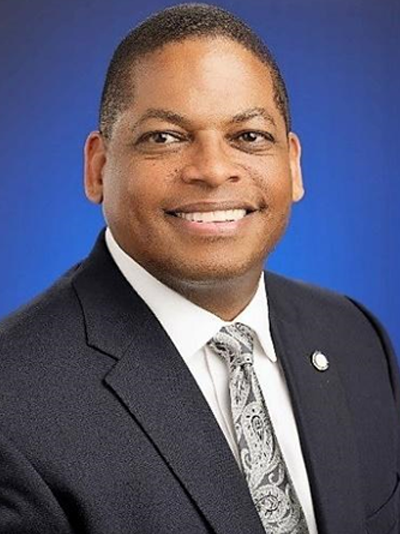 Mr. Daniel Scott ('85) Emeritus
Mr. Scott retired in 2023 from his role as CIO, Technology Services, for the Northrop Grumman Corporation. In that role, Scott had executive responsibility for operations and execution of Information Technology, Security, and Digital Transformation via Enterprise Services for the Defense Systems Sector. As a member of the Defense Systems leadership team, Scott also provided strategic guidance to ensure fulfillment of the sectors' business and financial commitments.
At the time of his retirement, Scott had more than 30 years of service with Northrop Grumman in the areas of Product and Systems Design & Development, Systems Engineering, and Program Management. Earlier, Scott served as Chief Information Officer (CIO) and sector vice president, Enterprise Services for Northrop Grumman’s Technology Services. He also supported the Aerospace Systems sector as Program Director, Research Technology and Engineering, with focus on program integration and systems engineering across the Basic Research, Applied Technology, and the Advanced Design organizations.
Previously, Scott served as the deputy capture leader for a corporate priority win program, where he provided team leadership and capture execution for integrated product teams and functional disciplines resulting in Northrop Grumman winning its largest ($30B-$90B) enterprise strategic program designed to provide the next generation of long-range global security.
In support of efforts to enhance corporate wide engagement, Scott also served as an executive advisor to OneAATG, a corporate-wide Employee Resource Group focused on impacting bottom-line performance, top-line growth, and enhancing Northrop Grumman’s competitive advantage.
Scott holds a Bachelor of Science in Aerospace Engineering from the University of Maryland and a Master of Business Administration from the University of Southern California. He’s completed several advanced management programs to include the General Management Program – Harvard Business School, the Aerospace Systems Program Management Conference, and campaign and capture leadership development programs.
 Mrs. Mary Snitch
Business Development Principal, Global S&T Organizations, Advanced Technology Center
Lockheed Martin Space Company
Mary’s nearly 40-year professional career includes ten years at the U.S. Department of State and the Arms Control and Disarmament Agency. She joined the private aerospace sector in 1983 with TRW. In 1985 Mary joined the Jet Propulsion Laboratory in Pasadena, CA as Manager, Legislative and International Affairs. Mary returned to Washington in 1990 to join Lockheed Martin Corporation. Mary works with LM executive leadership at Corporate HQ and the Space Company to advance their strategic goals through collaboration with external industry organizations.
Mary Snitch is an impactful contributor to the aerospace and STEM education community. She actively serves on Committees of the Board for the American Institute for Aeronautics and Astronautics (AIAA) and the University of Maryland Aerospace Engineering Board of Visitors. Mary is an Industry Member of the Committee on Space Research (COSPAR) and serves on their Council as the first Coordination Officer for Inclusion, Diversity, Equity and Accessibility (IDEA). Mary is an Advisor to the National Commission on Innovation and Competitiveness Frontiers and a Trustee of the Ron Brown Scholarship Foundation.
Mary and her husband, Dr. Thomas H. Snitch, established an endowment in UMD’s Clark School of Engineering, providing a scholarship to one undergraduate female in aerospace engineering annually. Mary received her Bachelor of Science in Business Administration from George Mason University and her Masters of Business Administration in Business, Economics and Public Policy from George Washington University.